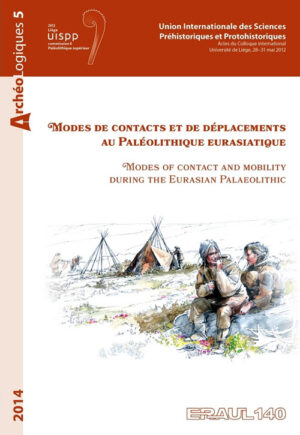
• par Marcel OTTE & Foni LE BRUN-RICALENS (Coord.)

    Table of content

    Publication des actes du Colloque de la Commission 8 de l’UISPP, Liège, 29-31 mai 2012 Avec le Paléolithique supérieur d’Eurasie, les contacts territoriaux présentent une extrême extension, attestée par les matériaux et les entités culturelles. Quelles furent les traces de ces réseaux d’extension à longue distance et comment les interpréter ? Pourquoi furent-elles si abondantes et si nettes par rapport aux périodes précédentes et ultérieures ? Quels sont les modèles, actuels ou anciens, qui les justifieraient ? Quels furent les liens triangulaires qui expliquent l’extension de tels réseaux fondés sur un nouvel équilibre entre les paysages, les mythes et la démographie ?

    With the Upper Palaeolithic of Eurasia, territorial contacts present an extreme expansion, attested by archaeological materials and cultural entities. What is the evidence for these long-distance expansion networks and how can it be interpreted? Why such evidence is so abundant and clear compared to preceding and subsequent periods? What are the current and former models that explain this expansion? What were the triangular links that explain the expansion of such networks based on a new equilibrium between landscapes, myths and demography?

    Contributions réparties en six thèmes : Thème I : Asie Thème II : Europe orientale Thème III : Europe centrale Thème IV : Europe occidentale Thème V : Arts Thème VI : Débats généraux
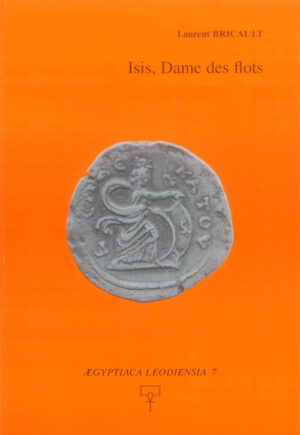
  • par Laurent BRICAULT 1. Jean WINAND, Le voyage d'Ounamon. Index verborum, concordance, relevés grammaticaux, 1987. 2. Jean WINAND, Études de néo-égyptien, 1. La morphologie verbale, 1992. 3. Pierre KOEMOTH, Osiris et les arbres. Contribution à l'étude des arbres sacrés de l'Égypte ancienne, 1994. 4. Juan Carlos MORENA GARCIA, Études sur l'administration, le pouvoir et l'idéologie en Égypte, de l'Ancien au Moyen Empire, 1997. 5. Dimitri LABOURY, La statuaire de Thoutmosis III. Essai d'interprétation d'un portrait royal dans son contexte historique, 1998. 6. Michel MALAISE & Jean WINAND, Grammaire raisonnée de l'égyptien classique, 1999. 7. Laurent BRICAULT, Isis, Dame des flots, 2006.
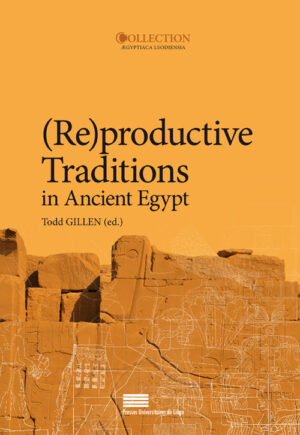
  • Proceedings of the conference held at the University of Liège, 6th-8th February 2013 par Todd GILLEN (ed.)

    Tradition is central to Egyptology, and this volume discusses and problematises the concept by bringing together the most recent work on archaeological, art historical and philological material from the Predynastic to the Late Period. The eclectic mix of material in this volume takes us from New Kingdom artists in the Theban foothills to Old Kingdom Abusir, and from changing ideas about literary texts to the visual effects of archaising statuary. With themes of diachrony persisting at the centre, aspects of tradition are approached from a variety of perspectives: as sets of conventions abstracted from the continuity of artefactual forms; as processes of knowledge (and practice) acquisition and transmission; and as relevant to the individuals and groups involved in artefact production. The volume is divided into four main sections, the first three of which attempt to reflect the different material foci of the contributions: text, art, and artefacts. The final section collects papers dealing with traditions which span different media.

    The concepts of cultural productivity and reproductivity are inspired by the field of text criticism and form common reference points for describing cultural change across contributions discussing disparate kinds of data. Briefly put, productive or open traditions are in a state of flux that stands in dialectic relation to shifting social and historical circumstances, while reproductive or closed traditions are frozen at a particular historical moment and their formulations are thereafter faithfully passed down verbatim. The scholars in this volume agree that a binary categorisation is restrictive, and that a continuum between the two poles of dynamic productivity and static reproductivity is by all means relevant to and useful for the description of various types of cultural production.

    This volume represents an interdisciplinary collaboration around a topic of perennial interest, a rarity in a field increasingly fractured by progressive specialisation.

    Todd GILLEN earned his PhD in Egyptology from Macquarie University, Sydney, and worked as a postdoctoral fellow for the Ramses project at the University of Liège. He has published on a variety of topics relating to ancient Egyptian text and culture of the New Kingdom. He is currently pursuing a career in psychology and counselling.

  • par Louis REMACLE Introduction générale. Aspects phonétiques, 100 cartes et notices
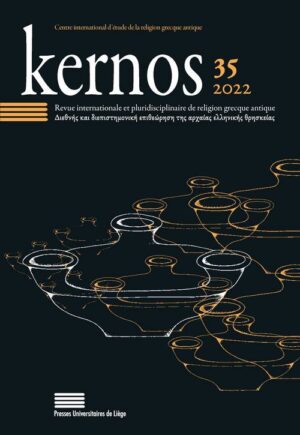
  • Kernos 35

    80,00 

    Éditorial

    Hommage à André Motte

    Actes du XVIe colloque international du CIERGA (partim), Des dieux, des jeux – et du hasard ? (en collaboration avec l’Advanced Grant ERC Locus ludi)

    Véronique DASEN & Vinciane PIRENNE-DELFORGE, En guise d’introduction Philippe BORGEAUD, Quelques réflexions sur le rapport entre jeu et pratique rituelle (Résumé/Abstract) Jörg RÜPKE, Playing with the Gods: materiality of religious communica­tion and ludic materiality in Cicero’s critique of divination (Résumé/Abstract) Irad MALKIN, Zeus, the Divine Lottery, and the Equality of Chance (Résumé/Abstract) Joachim Friedrich QUACK, Drawing Lots of the Gods in Roman Egypt (Résumé/Abstract) Arnaud MACÉ, Jouer avec la τύχη. Le jeu comme art de préparation aux coups durs (Platon, République X, 603e 4 –604d 5) (Résumé/Abstract) François LISSARRAGUE †, Joueurs ailés et incertitudes herméneutiques sur une coupe à Copenhague (Résumé/Abstract) Árpád M. NAGY, Erōs en kairō – un bas-relief à Budapest (Résumé/Abstract) Daniele MIANO, Fortuna, Games, and the Boundaries of the Divine: from Cicero to Boethius (Résumé/Abstract)

    Varia

    Ivana & Andrej PETROVIC, Hesiod’s Religious Norms in Context: on Works & Days 724–760 (Résumé/Abstract) Panagiotis KONSTANTINIDIS, What Dreams May Come: an incubation relief from the Asklepieion of Epidauros (Résumé/Abstract) Ombretta CESCA, Cultes d’Iris en Grèce : un état de la question (Résumé/Abstract)

    Chronique des activités scientifiques

    Epigraphic Bulletin 2019 Chronique archéologique Chroniques bibliographiques
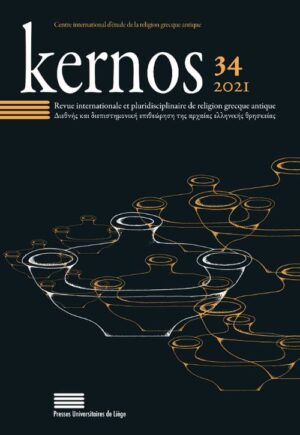
  • Kernos 34

    80,00 

    Éditorial

    par André MOTTE et Vinciane PIRENNE-DELFORGE

    Études

    Nicolette PAVLIDES, Heroes, Politics, and the Problem of Ethnicity in Archaic Sparta (Résumé/Abstract) Maria MILI, Croesus’s Lost Shield and other Marvellous Objects (Résumé/Abstract) J.Z. VAN ROOKHUIJZEN, The Erechtheion on the Acropolis of Athens (Résumé/Abstract) Petra PAKKANNEN, Beyond Skin-deep: Considering the Pig in Ancient Greece through the Particularities of Its Skin (Résumé/Abstract) Yulia USTINOVA, “The Story of a New Name”: Cultic Innovation in Greek Cities of the Black Sea and the Northern Aegean Area (Résumé/Abstract) Athanassia ZOGRAFOU, Gods around the Grave: Hermes and Hecate in Early Attic Curse Tablets (Résumé/Abstract) Christopher A. FARAONE, The Lead Tablet from Tongres: Curse or Amulet? (Résumé/Abstract)

    Chronique des activités scientifiques

    Epigraphic Bulletin 2018, par Angelos Chaniotis Chroniques bibliographiques
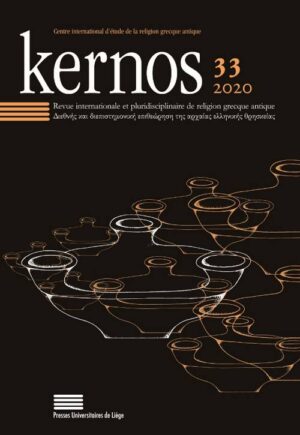
  • Kernos 33

    80,00 

    Éditorial

    par André MOTTE et Vinciane PIRENNE-DELFORGE

    Études

    Carman ROMANO, Works, Days, and Divine Influence in Hesiod’s Story World (Résumé/Abstract) Edoarda BARRA, Deux nouvelles interprétations du fr. 31 pour une Sappho « anthropologiquement correcte » (Résumé/Abstract) Sylvie VANSEVEREN, Carine VAN LIEFFERINGE, Αἰανής : parjure, démesure et justice divine (Résumé/Abstract) Naomi CARLESS UNWIN, Basket-Bearers and Gold-Wearers: Epigraphic Insights into the Material Dimensions of Processional Roles in the Greek East  (Résumé/Abstract) Madeleine JOST, Alaya PALAMIDIS, Points de vue sur Lykosoura. Retour sur le sanctuaire de Despoina (Résumé/Abstract) Jacques DES COURTILS, The “Cupules” of the Herakleion of Thasos (Résumé/Abstract) Jérémy CLÉMENT, La tonte funèbre des équidés et le chagrin d’Alexandre. Origines et interprétations d’une pratique de deuil (Résumé/Abstract) Michael ZELLMAN-ROHER, More on the Tradition of Amulet Pattern-Books in Post-Ancient Copies? (Résumé/Abstract)

    Chronique des activités scientifiques

    Epigraphic Bulletin 2017, par Angelos Chaniotis Chronique archéologique Chroniques bibliographiques
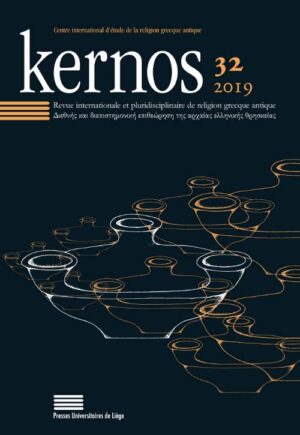
  • Kernos 32

    80,00 
    Philippe BORGEAUD, Hommage à Marcel Detienne

    Éditorial

    par André MOTTE et Vinciane PIRENNE-DELFORGE

    Études

    Bartek BEDNAREK, Orpheus in Aeschylus and the Thracian child-eater on a hydria from the British Museum (Résumé/Abstract) Claudio BIAGETTI, Una menzione di Atena Archegetis in P.Hib. I 15. Note sull’epiteto e sul suo impiego ad Atene (Résumé/Abstract) Sonia DARTHOU, L’olivier, identité et rempart d’Athènes : un épisème de la cité ? (Résumé/Abstract) Julie BALÉRIAUX, Mythical and ritual landscapes of Poseidon Hippios in Arcadia (Résumé/Abstract) Hedvig VON EHRENHEIM, Causal explanation of disease in the iamata of Epidauros (Résumé/Abstract) Dennis D. HUGHES, The Cult of Aratus at Sicyon (Plutarch, Aratus, 53) (Résumé/Abstract) Stefano CANEVA, Variations dans le paysage sacré de Pergame : l’Asklépieion et le temple de la terrasse du théâtre (Résumé/Abstract) Alaya PALAMIDIS, Des souris et des hommes. Une réinvention érudite du culte d’Apollon Smintheus à l’époque hellénistique ? (Résumé/Abstract) Denis ROUSSET, Géographie, paléographie et philologie. Note sur un lieu de culte de Déméter (Résumé/Abstract) Anna ANGELINI, Naming the gods of the others in the Septuagint: lexical analysis and historical-religious implications (Résumé/Abstract) Corinne BONNET, Sylvain LEBRETON, Mettre les polythéismes en formules ? À propos de la Base de Données Mapping Ancient Polytheisms (Résumé/Abstract)

    Chronique des activités scientifiques

    Epigraphic Bulletin 2016, par Angelos Chaniotis Chroniques bibliographiques
  • MENTOR

    87,00 
    Guide bibliographique de la religion grecque antique. Bibliographical Survey of Greek Religion Il s’agit de la suite du Supplément 1 (1992). Le prix combiné des deux volumes est de 175 Euros. Voir la présentation du programme Mentor.
  • par Louis REMACLE Aspects morphologiques, 122 cartes et notices.
  • Articles – Artikels Arnaud Amilien, Quand les motifs mythiques soulignent l’évolution d’un personnage. Le cas de Cyrus chez Hérodote Miriam A. Valdés Guía, El juicio por el Ática: Cecrópidas, Thriai y el voto femenino en Atenas arcaica Christian San José Campos, Ptolemy I and the West. Exemplifying an Unfinished Policy and the Creation of the Western Clause in Alexander’s Hypomnemata Paola Dardano, Strategie di traduzione nei testi biblici. I genitivi assoluti greci nelle traduzioni latine dei Vangeli Georgios Vassiliades, “Don’t Call Me a Monarch!” Truth and Authority in Tiberius’ recusatio imperii (Tacitus, Annales I, 7–13) Simon Lambert, Entre Μάρκος (Ἀντωνῖνος) ὁ φιλόσοφος et Divus Marcus. Étude de l’évolution de l’image posthume de Marc Aurèle et de la (re)construction du souvenir d’un philosophe Jean-Yves Strasser, L. Egnatius Victor Lollianus, de Sardes à Athènes et Nicomédie Mélanges – Miscellanea – Short Notes Marco Gemin, Animali selvaggi e fantastici nel Politico di Platone Fulvio Beschi, Nota a Ov., Am. I, 6, 23 Comptes rendus – Recensies – Book Reviews
  • Kernos 37

    90,00 

    Éditorial

    Actes du XVIe colloque international du CIERGA (partim) Des dieux, des jeux – et du hasard ?

    Vinciane PIRENNE-DELFORGE, Tychè en famille : généalogies et profil divin (Résumé/Abstract) Paulin MAILLARD, Aux origines des attributs de Tychè (Résumé/Abstract) Marco VESPA, Un tripot dans le sanctuaire ? Les skirapheia et le culte d’Athéna Skiras : une construction savante d’époque impériale (Résumé/Abstract) Véronique DASEN, Athéna en jeu. Actualité des débats antiquaires du XIXe siècle sur une partie de Pente Grammai dans la céramique grecque (Résumé/Abstract)

    Dossier : La notion de « polis-religion » à l’épreuve des normes et de l’autorité religieuse

    Vinciane PIRENNE-DELFORGE, Antoine CHABOD, En guise d’ouverture Carmine PISANO, The polis-religion in the mirror of exousia: sources of authority in Greek ritual norms (Résumé/Abstract) Paulin ISMARD, Des cultes en partage : les acteurs de la polis-religion (Résumé/Abstract) Antoine CHABOD, Ni magistrat, ni prêtre ? Les énonciateurs des lois entre normativité civique et pratiques rituelles en Grèce archaïque et classique (Résumé/Abstract) Emily KEARNS, ‘Learning my instructions, Orestes…’: who authorises worship in the Greek world? (Résumé/Abstract) Robert PARKER, Dionysus and polis religion (Résumé/Abstract) Nicole BELAYCHE, Autorités sacerdotales et expériences religieuses individuelles en Anatolie d’après des objets-stèles inscrits (Résumé/Abstract) Paul COURNARIE, La religion de l’appartenance. Normes rituelles, autorité et société dans les cérémonies d’accueil de l’époque hellénistique (Résumé/Abstract) Francesco MASSA, La polis-religion dans l’Antiquité tardive : une notion pertinente pour l’empire romain du IVe siècle de notre ère ? (Résumé/Abstract)

    Varia

    Roy VAN WIJK, Take me to the River: Sanctuaries, Connectivity, and Genealogy in Southern Boiotia and Euboia (800–300 BCE) (Résumé/Abstract) Evan VANCE, Apollo Patroios on Aegina (Résumé/Abstract) Kyle MAHONEY, The Arcadian Nymph Anthrakia and the Lignite Deposits of the Megalopolis Basin (Résumé/Abstract) Chris ATKINS, In a Dark and Glistening Land: Ritual Hexameters, Curse Tablets, and Sacred Rites in Classical Sicily (Résumé/Abstract)

    Chronique des activités scientifiques

    Epigraphic Bulletin 2021 Chroniques bibliographiques
  • Volume I Crossing Boundaries This book is the first in a series of volumes designed to provide a detailed overview of the New Kingdom hieratic materials preserved in various museums and public collections around the world. Each volume is arranged geographically and proceeds in alphabetic order—continent by continent and country by country. Volume 1 opens with a complete overview of the New Kingdom hieratic material in the Egyptian Museum in Cairo, which is followed by overviews of 18 European museums and 3 North American collections. The endeavour is directly connected to the interdisciplinary project Crossing Boundaries: Understanding Complex Scribal Practices in Ancient Egypt, a joint venture of the University of Basel, the University of Liège, and the Museo Egizio (Turin). Since 2019, the Crossing Boundaries project has targeted the rich papyrological materials from the village of Deir el-Medina (c. 1350–1050 BCE) held in the Museo Egizio, seeking to enhance our understanding of the scribal practices that lie behind the production of the texts from this community. The driving methodological motto of Crossing Boundaries has been to adopt a contextualized approach to these written documents. As progress was made on the Deir el-Medina materials, the need to develop a clearer picture of all the hieratic texts available from the same period quickly became evident, which is met by the present publication. Table des matières
  • Volume II Crossing Boundaries This book is the second in a series of volumes designed to provide a detailed overview of the New Kingdom hieratic materials preserved in various museums and public collections around the world. Each volume is arranged geographically and proceeds in alphabetic order—continent by continent and country by country. Volume 2 contains overviews (and case studies) of 13 European museums and collections, including the French National Library (BnF, Paris), the Louvre (Paris), the Museo Egizio (Turin), the Rijksmuseum van Oudheden (Leiden), and the Vatican Museums. The endeavour is directly connected to the interdisciplinary project Crossing Boundaries: Understanding Complex Scribal Practices in Ancient Egypt, a joint venture of the University of Basel, the University of Liège, and the Museo Egizio (Turin). Since 2019, the Crossing Boundaries project has targeted the rich papyro­logical materials from the village of Deir el-Medina (c. 1350–1050 BCE) held in the Museo Egizio, seeking to enhance our understanding of the scribal practices that lie behind the production of the texts from this community. The driving methodological motto of Crossing Boundaries has been to adopt a contextualized approach to these written documents. As progress was made on the Deir el-Medina materials, the need to develop a clearer picture of all the ­hieratic texts available from the same period quickly became evident, which is met by the present publication. Table des matières L’ouvrage complet est disponible en open access à l’adresse suivante : https://doi.org/10.25518/978-2-87562-432-1
  • Essai d'interprétation d'un portrait royal dans son contexte historique par Dimitri LABOURY 1. Jean WINAND, Le voyage d'Ounamon. Index verborum, concordance, relevés grammaticaux, 1987. 2. Jean WINAND, Études de néo-égyptien, 1. La morphologie verbale, 1992. 3. Pierre KOEMOTH, Osiris et les arbres. Contribution à l'étude des arbres sacrés de l'Égypte ancienne, 1994. 4. Juan Carlos MORENA GARCIA, Études sur l'administration, le pouvoir et l'idéologie en Égypte, de l'Ancien au Moyen Empire, 1997. 5. Dimitri LABOURY, La statuaire de Thoutmosis III. Essai d'interprétation d'un portrait royal dans son contexte historique, 1998. 6. Michel MALAISE & Jean WINAND, Grammaire raisonnée de l'égyptien classique, 1999.
  • par J. LECHANTEUR La maison et le ménage (2e partie), 180 notices et 64 cartes.
  • par J. LECHANTEUR La maison et le ménage (1re partie), 190 notices et 82 cartes Prix «Élisée Legros».
  • par É. LEGROS Les phénomènes atmosphériques et les divisions du temps, 208 notices et 70 cartes
  • par M.-G. BOUTIER Le corps humain et les maladies (2e partie), 165 notices et 65 cartes Prix «Sciences humaines et Folklore Albert Doppagne» de la Fondation Charles Plisnier.
  • par M.-G. BOUTIER La terre, les plantes et les animaux (3e partie), 194 notices et 100 cartes Prix «Élisée Legros», prix des «Amis de l'Université de Liège», prix de Philologie de la Communauté française de Belgique, prix «Albert Dauzat» de la Société de linguistique romane.
Aller en haut