-
L’envoi en possession en droit romain classique Adrian HÄUSLER Assurer la conservation de biens, faire pression sur un citoyen récalcitrant, punir un certain comportement, permettre l’exécution d’une prétention, voilà autant d’objectifs poursuivis par l’envoi en possession (missio in possessionem), une mesure emblématique du droit prétorien. Le présent ouvrage offre la première investigation complète sur une institution jusqu’ici souvent traitée de façon marginale dans la littérature juridique. D’abord conçue comme une saisie provisoire du patrimoine du débiteur dans le cadre de l’exécution forcée, la funeste mesure s’est assouplie et a investi l’ensemble de l’ordre juridique romain dans des domaines aussi variés que les droits des successions, de la famille ou du voisinage. Le recensement d’un large panel de sources, parfois regrettablement lacunaire, permet à l’auteur d’apporter un éclairage nécessaire sur l’existence et les modalités des différentes causes d’envoi en possession fixées ou non dans l’édit du préteur. À cet égard, une nouvelle reconstruction de portions de l’édit perpétuel se voit proposée. L’évolution de la terminologie juridique, la procédure applicable, les conséquences pour le débiteur ainsi que le régime de droits et d’obligations liant les parties durant l’envoi en possession font également l’objet d’une analyse approfondie. L’examen démontre que, malgré une grande diversité de cas d’application due au développement de la législation prétorienne et à la créativité des jurisconsultes, l’envoi en possession a maintenu un caractère uniforme en droit romain classique et constitue une institution fondamentale pour le fonctionnement de l’édifice judiciaire romain.
-
Animal-human hybrid deities in Greek religion Emma ASTON
Many of the beings in this book – Cheiron, Pan, Acheloos, the Sirens and others – will be familiar from the narratives of Greek mythology, in which fabulous anatomies abound. However, they have never previously been studied together from a religious perspective, as recipients of cult and as members of the ancient pantheon. This book is the first major treatment of the use of part-animal – mixanthropic – form in the representation and visual imagination of Greek gods and goddesses, and of its significance with regard to divine character and function. What did it mean to depict deities in a form so strongly associated in the ancient imagination with monstrous adversaries? How did iconography, myth and ritual interact in particular sites of worship? Drawing together literary and visual material, this study establishes the themes dominant in the worship of divine mixanthropes, and argues that, so far from being insignificant curiosities, they make possible a greater understanding of the fabric of ancient religious practice, in particular the tense and challenging relationship between divinity and visual representation.
-
Style, narratologie, thématique TRACES 11 par COLLECTIF Jacqueline LEVI-VALENSKI, Ouverture de la journée d’étude Bernard ALAVOINE, Georges Simenon, reflet des inquiétudes de l’homme du XXe siècle Michel LEMOINE, 1989-1999 : dix ans de recherche simenonienne Patrick BERTHIER, Peut-on parler de Simenon à l’université comme on y parle de Balzac ? Jacques LECARME, Les cinq voies de l’autobiographie simenonienne Abdelouahed MABROUR, Un aspect de la description chez Simenon : la caractérisation adjectivale Eugène KOUCHKINE, Simenon en Russie Piroska SEBE-MADACSY, La réception chez Georges Simenon en Hongrie Paul MERCIER, L’homme à la plage Michel CARLY, Florida Confidential Pierre DELIGNY, Inventaire des billets quotidiens de Georges Sim à la Gazette de Liège de novembre 1919 à décembre 1922 (II)
-
par Marcel OTTE & Foni LE BRUN-RICALENS (Coord.)
Table of content
Publication des actes du Colloque de la Commission 8 de l’UISPP, Liège, 29-31 mai 2012 Avec le Paléolithique supérieur d’Eurasie, les contacts territoriaux présentent une extrême extension, attestée par les matériaux et les entités culturelles. Quelles furent les traces de ces réseaux d’extension à longue distance et comment les interpréter ? Pourquoi furent-elles si abondantes et si nettes par rapport aux périodes précédentes et ultérieures ? Quels sont les modèles, actuels ou anciens, qui les justifieraient ? Quels furent les liens triangulaires qui expliquent l’extension de tels réseaux fondés sur un nouvel équilibre entre les paysages, les mythes et la démographie ?
With the Upper Palaeolithic of Eurasia, territorial contacts present an extreme expansion, attested by archaeological materials and cultural entities. What is the evidence for these long-distance expansion networks and how can it be interpreted? Why such evidence is so abundant and clear compared to preceding and subsequent periods? What are the current and former models that explain this expansion? What were the triangular links that explain the expansion of such networks based on a new equilibrium between landscapes, myths and demography?
Contributions réparties en six thèmes : Thème I : Asie Thème II : Europe orientale Thème III : Europe centrale Thème IV : Europe occidentale Thème V : Arts Thème VI : Débats généraux -
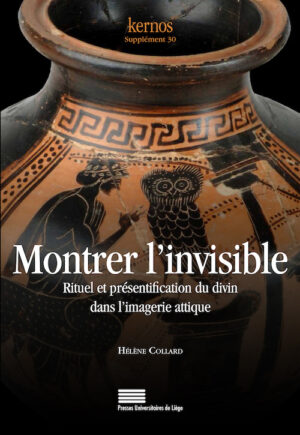
Rituel et présentification du divin dans l’imagerie attique Hélène COLLARD
Comment faire voir ce qui ne se voit pas ? Comment représenter la communication avec les dieux dans la figuration d’un rituel ? Ce sont de telles questions qu’ont dû affronter les peintres de vases athéniens dans la mise en image des actes posés en l’honneur d’une pluralité d’entités divines. Afin de « présentifier l’invisible », ils ont ainsi développé diverses stratégies figuratives qu’il s’agit de saisir par le biais des séries d’images qui les mettent en œuvre. Les différentes formulations graphiques de la présence divine au rituel sont au cœur de ce livre qui scrute l’imagerie des vases attiques des VIe et Ve siècles avant notre ère afin de nourrir le questionnement sur la représentation et la perception du divin dans le polythéisme grec.
Ce volume est publié avec le soutien de l’Université de Liège et de la Commission Européenne dans le cadre du projet FP7-PEOPLE-COFUND-BeIPD
-
L’apport des papyrus Textes rassemblés et édités par Marie-Hélène Marganne et Gabriel Nocchi Macedo
Si, redécouvertes il y a un peu plus d’un siècle, la musique et la danse antiques connaissent ces dernières années un réel regain d’intérêt, notamment suite aux dernières découvertes archéologiques et papyrologiques, aucun volume en français accessible aux non-spécialistes, n’a montré jusqu’ici l’apport précieux de la papyrologie à la connaissance de ces disciplines immatérielles, mais combien suggestives pour des lecteurs duXXIe siècle, immergés, comme jamais auparavant, dans une société de loisirs, où l’image et le son ont pris tant d’importance. Tel est le but poursuivi par le no 10 des Cahiers du CEDOPAL, qui rassemble les exposés présentés lors de la journée d’étude internationale Musique et danse dans le monde gréco-romain : l’apport de la papyrologie, organisée le mardi 26 mars 2019 à l’Université de Liège.
Directrice honoraire du CEDOPAL de l'Université de Liège, Marie-Hélène Marganne y a enseigné la papyrologie littéraire, la paléographie grecque et la langue grecque jusqu’en 2020. À la fois papyrologue, philologue classique et historienne de la médecine, elle est l'auteur de nombreuses publications sur les papyrus médicaux, la médecine gréco-romaine, le livre et les bibliothèques antiques.
Directeur du CEDOPAL et chargé de cours en papyrologie grecque et latine à l’Université de Liège, Gabriel Nocchi Macedo est l’auteur de nombreuses publications dans les domaines de la papyrologie littéraire, de l’histoire du livre et de l’écriture et de la transmission et réception de la poésie grecque et latine.
-
Histoire, physiologie, géographie, intermédialités par François-Emmanuël BOUCHER, Sylvain DAVID et Maxime PRÉVOST (éds)
Les superhéros, demi-dieux d’un monde sans Dieu, constituent collectivement une mythologie laïque se diffractant en sous-ensembles de mythes modernes. Ceux-ci ont infiltré de manière durable l’imaginaire collectif. Dans une entrevue de 1985, Stan Lee, co-créateur de Spiderman, de Hulk, de Thor et des Quatre Fantastiques, entre autres superhéros, observait que quiconque s’intéresse au cinéma, à la littérature, à l’opéra, à la peinture ou à tout autre art de la représentation devrait aussi porter attention aux comic books, tout aussi déterminants que les autres arts populaires dans la constitution de l’imaginaire social. À l’heure où l’histoire culturelle n’a plus à prouver sa pertinence, un tel énoncé ne paraît plus paradoxal. Partant de l’affirmation d’Ernst Cassirer selon laquelle le mythe est « l’objectivation de l’expérience sociale de l’humanité », on pourra s’interroger sur la socialité de ces êtres d’irréalisme pur : comment, à quelles conditions et pourquoi est-il permis au lecteur ou au spectateur de s’identifier à un personnage dont les caractéristiques transcendent celles de l’humanité ordinaire ?
François-Emmanuël Boucher est professeur au Département d’études françaises du Collège militaire royal du Canada. Il a publié Les Révélations humaines. Mort sexualité et salut au tournant des Lumières (Peter Lang). Sylvain David est professeur au Département d’études françaises de l’Université Concordia. Il a notamment publié Cioran. Un héroïsme à rebours (Presses de l’Université de Montréal, « Espace littéraire »). Maxime Prévost est professeur au Département de français de l’Université d’Ottawa. Il est l’auteur de Rictus romantiques. Politiques du rire chez Victor Hugo (Presses de l’Université de Montréal, « Socius »). -
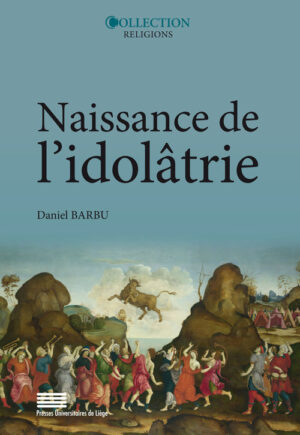
Image, identité, religion par Daniel BARBU
« I dolâtrie » est un terme dépréciatif qui sert à désigner les cultes des faux dieux en face d’un dieu considéré comme unique et véritable. Plongeant ses racines dans les réflexions antiques sur la religion des « autres », cette notion se trouve au coeur des débats qui, des Pères de l’Église aux explorateurs modernes, interrogent la diversité des cultes et des pratiques religieuses. Au fil des siècles, cette catégorie polémique a fabriqué l’altérité tout en reléguant l’« autre », le « païen », le « sauvage », l’« hérétique », l’« ignorant », du côté de l’erreur et de l’aberration. La notion d’idolâtrie condamne comme fausse la religion de l’« autre », voire lui refuse la qualité même de religion. Cette histoire, où les « sauvages » du Nouveau Monde rejoignent les peuples de l’Antiquité, annonce l’émergence d’une véritable science des religions. Ce livre retrace la naissance de « l’idolâtrie » au croisement des réflexions juives et grecques sur l’image, les origines de la culture et la diversité religieuse. Des débats grecs sur l’anthropomorphisme à la critique des « idoles » dans le judaïsme ancien, il explore les fondements antiques d’une histoire comparée des religions.
Daniel BARBU est historien des religions, spécialisé dans l’histoire du judaïsme antique et médiéval. Il a enseigné aux Université de Genève, Lausanne, Berne et Zurich. Ses recherches portent sur la formation des identités religieuses dans l’Antiquité, sur les controverses religieuses entre juifs et chrétiens, et sur l’historiographie des sciences religieuses. Il a notamment édité Le Savoir des religions. Fragments d’historiographie religieuse (2014) et il est l’un de membres fondateurs de la revue d’anthropologie et d'histoire des religions Asdiwal.
-
Las verdades de una subalternista Kristine Vanden Berghe
Sobre Cartucho y Las manos de mamá, los dos libros hermanos que escribiera sobre la Revolución mexicana, Nellie Campobello afirmó que en ellos no hacía otra cosa que decir la verdad. Sin embargo, en ambos textos mezcla la realidad y la ficción de tal manera que genera dudas sobre si es más apropiado leerlos en clave literaria-ficticia o histórica-autobiográfica. En ellos la verdad no resiste a la comprobación empírica, sino que debe entenderse como una promesa de representar los hechos a partir de una perspectiva ideológica “verdadera”. Esta perspectiva es consecuentemente subalternista y la autora pinta al pueblo subalterno de tal forma que suscite simpatía hacia su causa.
Lo logra en primer lugar gracias a sus elecciones formales, entre las cuales destacan la elipsis, el desorden narrativo y la parataxis. Demostramos que estos recursos estilísticos, acordes con el referente del discurso, allegan su obra al estilo primitivo y a la escritura errante, y emparentan su lenguaje con aquel del Antiguo Testamento y los corridos, pero también con la obra de Juan Rulfo de la cual es un antecedente importante.
A generar comprensión hacia las personas subalternas contribuyen igualmente los retratos que les pinta en términos de afectos. La gente del pueblo, los jóvenes que entran en la Revolución y las personas que sufren hambre representan una comunidad emocional que se deja afectar y que “piensa con el corazón”. Contrasta con otra que, fría y racional, es integrada por quienes ejercen mal su autoridad.
Entre los personajes de Campobello destaca una galería de mujeres — especialmente la narradora Nellie, su madre Rafaela y Nacha Ceniceros — que se retratan en función de su fortaleza y resiliencia, pero también de su espíritu de venganza y de su vitalismo. Este gusto por la vida y sus placeres apunta a la filosofía del vitalismo de Nietzsche, un filósofo bien conocido y muy leído en el México de su época.
Los recursos estilísticos y los retratos de sus personajes desde el punto de vista de los afectos son los principales objetos del presente estudio que procura demostrar que en la obra de Campobello vienen estrechamente vinculados estilo e ideología, acciones y emociones, principios políticos y códigos éticos.
Kristine VANDEN BERGHE es profesora titular de Lengua española y letras hispanas en la Université de Liège. Su investigación se enfoca en la literatura hispanoamericana de los siglos XX y XXI, con un énfasis en la narrativa mexicana y colombiana. Ha publicado artículos en numerosas revistas académicas y en esta serie “Littératures” ha editado con Catalina Quesada el volumen titulado El libro y la vida (2019) sobre la obra de Héctor Abad Faciolince; y, con Nicolas Licata y Yanna Hadatty Mora, Tradición y transgresión (2023), acerca de la escritora Guadalupe Nettel. Después de Homo ludens en la revolución (Iberoamericana/Vervuert/Bonilla 2013), este es el segundo libro que dedica a la obra de Nellie Campobello.
-
Volume II Crossing Boundaries This book is the second in a series of volumes designed to provide a detailed overview of the New Kingdom hieratic materials preserved in various museums and public collections around the world. Each volume is arranged geographically and proceeds in alphabetic order—continent by continent and country by country. Volume 2 contains overviews (and case studies) of 13 European museums and collections, including the French National Library (BnF, Paris), the Louvre (Paris), the Museo Egizio (Turin), the Rijksmuseum van Oudheden (Leiden), and the Vatican Museums. The endeavour is directly connected to the interdisciplinary project Crossing Boundaries: Understanding Complex Scribal Practices in Ancient Egypt, a joint venture of the University of Basel, the University of Liège, and the Museo Egizio (Turin). Since 2019, the Crossing Boundaries project has targeted the rich papyrological materials from the village of Deir el-Medina (c. 1350–1050 BCE) held in the Museo Egizio, seeking to enhance our understanding of the scribal practices that lie behind the production of the texts from this community. The driving methodological motto of Crossing Boundaries has been to adopt a contextualized approach to these written documents. As progress was made on the Deir el-Medina materials, the need to develop a clearer picture of all the hieratic texts available from the same period quickly became evident, which is met by the present publication. Table des matières
- Andrea FANCIULLI, Kathrin GABLER, Jessica IZAK, Martina LANDRINO, Matthias MÜLLER, Renaud PIETRI, Stéphane POLIS, Nathalie SOJIC, Stephan M. UNTER New Kingdom Hieratic Collections From Around the World. Introduction https://doi.org/10.25518/978-2-87562-432-1.01
- Bettina BADER, Charlotte DIETRICH, Johannes JÜNGLING & Julian POSCH New Kingdom Hieratic at the Kunsthistorisches Museum, Vienna https://doi.org/10.25518/978-2-87562-432-1.02
- Vanessa DESCLAUX & Chloé RAGAZZOLI New Kingdom Hieratic Texts in the French National Library With a Focus on an Unpublished Deir el-Medina Archive (P. BN Ms. Égyptien 237) https://doi.org/10.25518/978-2-87562-432-1.03
- Marc ÉTIENNE Le veau du dessinateur Hormin (P. Louvre E 32309) https://doi.org/10.25518/978-2-87562-432-1.04
- Sylvie DONNAT New Kingdom Hieratic Texts in the Strasbourg Collections. An Overview https://doi.org/10.25518/978-2-87562-432-1.05
- Dominique LEFÈVRE Le papyrus Strasbourg 23i+44iii https://doi.org/10.25518/978-2-87562-432-1.06
- Mélanie FLOSSMANN-SCHÜTZE & Maren GOECKE-BAUER Von lehrreichen Texten, Rosinen für die Liebe und einem Wein auf Reisen Hieratika des Neuen Reiches im Staatlichen Museum Ägyptischer Kunst München https://doi.org/10.25518/978-2-87562-432-1.07
- Kata JASPER & Julianna K. PAKSI New Kingdom Hieratic Sources in the Collection of the Museum of Fine Arts, Budapest https://doi.org/10.25518/978-2-87562-432-1.08
- Sara DEMICHELIS, Andrea FANCIULLI & Susanne TÖPFER New Kingdom Hieratic Material in the Museo Egizio in Turin https://doi.org/10.25518/978-2-87562-432-1.09
- Alessia AMENTA, Florence ALBERT, Sara DEMICHELIS & Chiara FORNACIARI DA PASSANO New Kingdom Hieratic Papyri in the Collection of the Vatican Museums https://doi.org/10.25518/978-2-87562-432-1.10
- Daniel SOLIMAN New Kingdom Hieratic Texts in the Collection of the Rijksmuseum van Oudheden in Leiden https://doi.org/10.25518/978-2-87562-432-1.11
- Isabel OLBÉS RUIZ DA ALDA, Esther PONS MELLADO, With Rob J. DEMARÉE, Stéphane POLIS & Federico POOLE Three Objects with Hieratic Inscriptions in the Museo Arqueológico Nacional (Madrid). Wooden Coffin with Stick Shabti 2524 and Ostracon 16243 https://doi.org/10.25518/978-2-87562-432-1.12
- Martin BÜRGE, Rob J. DEMARÉE, Matthias MÜLLER & Malte RÖMER New Kingdom Hieratic Sources in the Archaeological Collection of the University of Zurich https://doi.org/10.25518/978-2-87562-432-1.13
- Dominique LEFÈVRE & Xavier DROUX Les documents hiératiques du Nouvel Empire conservés à la Fondation Gandur pour l’Art, Genève. Un groupe exceptionnel de jarres inscrites en calcite-albâtre https://doi.org/10.25518/978-2-87562-432-1.14
- Ashley COOKE, Roland ENMARCH & Joel SAMS New Kingdom Hieratic Material in World Museum, Liverpool https://doi.org/10.25518/978-2-87562-432-1.15
-
Volume I Crossing Boundaries This book is the first in a series of volumes designed to provide a detailed overview of the New Kingdom hieratic materials preserved in various museums and public collections around the world. Each volume is arranged geographically and proceeds in alphabetic order—continent by continent and country by country. Volume 1 opens with a complete overview of the New Kingdom hieratic material in the Egyptian Museum in Cairo, which is followed by overviews of 18 European museums and 3 North American collections. The endeavour is directly connected to the interdisciplinary project Crossing Boundaries: Understanding Complex Scribal Practices in Ancient Egypt, a joint venture of the University of Basel, the University of Liège, and the Museo Egizio (Turin). Since 2019, the Crossing Boundaries project has targeted the rich papyrological materials from the village of Deir el-Medina (c. 1350–1050 BCE) held in the Museo Egizio, seeking to enhance our understanding of the scribal practices that lie behind the production of the texts from this community. The driving methodological motto of Crossing Boundaries has been to adopt a contextualized approach to these written documents. As progress was made on the Deir el-Medina materials, the need to develop a clearer picture of all the hieratic texts available from the same period quickly became evident, which is met by the present publication. Table des matières
- Andrea FANCIULLI, Kathrin GABLER, Jessica IZAK, Martina LANDRINO, Antonio LOPRIENO, Matthias MÜLLER, Renaud PIETRI, Stéphane POLIS, Nathalie SOJIC, Susanne TÖPFER, Stephan M. UNTER New Kingdom Hieratic Collections From Around the World. Introduction https://doi.org/10.25518/978-2-87562-416-1.01
- Khaled HASSAN New Kingdom Hieratic Texts in the Egyptian Museum in Cairo. Survey and History of the Collection https://doi.org/10.25518/978-2-87562-416-1.02
- Friedhelm HOFFMANN Klagenfurt, Landesmuseum für Kärnten. Zwei neuzeitliche Papyruspäckchen https://doi.org/10.25518/978-2-87562-416-1.03
- Stéphanie BOULET, Luc DELVAUX, Robert J. DEMARÉE, Christian DUPUIS & Benoît LURSON Hieratic Ostraca and Jar Dockets in the Royal Museums of Art and History (Brussels). An Interdisciplinary Edition and Study https://doi.org/10.25518/978-2-87562-416-1.04
- Sofie SCHIØDT New Kingdom Hieratic Texts in Danish Collections https://doi.org/10.25518/978-2-87562-416-1.05
- Jan MOJE The New Kingdom Hieratic Material in the Ägyptisches Museum & Papyrussammlung in Berlin. A Brief Overview https://doi.org/10.25518/978-2-87562-416-1.06
- Hans-Werner FISCHER-ELFERT Ägyptisches Museum der Universität Leipzig https://doi.org/10.25518/978-2-87562-416-1.07
- Maren GOECKE-BAUER, Friedhelm HOFFMANN, Philipp SEYR, Martina ULLMANN, Stefan WIMMER Die hieratischen Papyrusfragmente der Universitätsbibliothek München. P. UBM Cim. 93 (1–3 [= 8o Cod. ms. 431a, 431b, 431c]) https://doi.org/10.25518/978-2-87562-416-1.08
- Martina LANDRINO A Wine-Jar Label in the National Museum of Ireland, Dublin https://doi.org/10.25518/978-2-87562-416-1.09
- Daniela PICCHI, Paul WHELAN & Alessandro GALLI From Egypt to Bologna: Stories of Collectors and Objects Inscribed with Hieratic Texts https://doi.org/10.25518/978-2-87562-416-1.10
- Anna CONSONNI & Federico CONTARDI The New Kingdom Hieratic Collection of the Museo Archeologico Nazionale di Firenze — “Museo Egizio” https://doi.org/10.25518/978-2-87562-416-1.11
- Andrei N. NIKOLAEV & Andrey O. BOLSHAKOV The State Hermitage Museum https://doi.org/10.25518/978-2-87562-416-1.12
- Robert J. DEMARÉE & Andreas DORN Textile and Fish Accounts from the Palace Administration of Ramesses II in Gurob. Fragments of Ramesside Administrative Documents in the Museum Kulturen in Lund https://doi.org/10.25518/978-2-87562-416-1.13
- Andreas DORN Hieratic Texts on Figurative Ostraca: Above, Besides, and Below the Images. Hieratic Documents in the Medelhavsmuseet (Stockholm) https://doi.org/10.25518/978-2-87562-416-1.14
- Andreas DORN Nil novi sub sole? Hieratic Documents in the Museum Gustavianum (the Uppsala University Collection) https://doi.org/10.25518/978-2-87562-416-1.15
- Jean-Luc CHAPPAZ Documents conservés dans les institutions de Genève https://doi.org/10.25518/978-2-87562-416-1.16
- Daniel M. POTTER National Museums Scotland. New Kingdom Hieratic Texts in Edinburgh https://doi.org/10.25518/978-2-87562-416-1.17
- Angela McDONALD & Andrew MILLS New Kingdom Hieratic Texts in The Hunterian, University of Glasgow https://doi.org/10.25518/978-2-87562-416-1.18
- Ilona REGULSKI & Susanne BECK New Kingdom Hieratic Material at the British Museum. Unedited Fragments from a Fake Papyrus Roll in the British Museum (P. BM EA 10720.6 and P. BM EA 10720.4) https://doi.org/10.25518/978-2-87562-416-1.19
- Stephen QUIRKE & Fredrik HAGEN New Kingdom Hieratic in the UCL Petrie Museum of Egyptian and Sudanese Archaeology. Collection-level Summary, and a Preliminary Report on the Gurob Papyri https://doi.org/10.25518/978-2-87562-416-1.20
- Lawrence M. BERMAN & Margaret GEOGA New Kingdom Hieratic Documents in the Museum of Fine Arts, Boston https://doi.org/10.25518/978-2-87562-416-1.21
- Brian P. MUHS & Foy D. SCALF New Kingdom Hieratic Manuscripts in the Oriental Institute Museum (Chicago) https://doi.org/10.25518/978-2-87562-416-1.22
- Foy SCALF, Judith BARR & Sara E. COLE Two New Kingdom Hieratic Manuscripts from the Collection of the J. Paul Getty Museum, Los Angeles https://doi.org/10.25518/978-2-87562-416-1.23
-
Exemples de l’Europe et des premières nations en Amérique du Nord avant le contact européen Actes de sessions présentées au Xe congrès annuel de l’Association Européenne des Archéologues (Lyon, 8-11 septembre 2004) par Céline BRESSY, Ariane BURKE, Pierre CHALARD & Hélène Martin (dirs) Table of content
Avant-Propos (Version française – English version) | Céline Bressy, Ariane Burke, Pierre Chalard et Hélène Martin Occupation du territoire et exploitation des matières premières lithiques: présentation et discussion sur la mobilité des groupes humains au Paléolithique Moyen dans le Nord-Est de l’Italie | Guillaume Porraz & Marco Peresani Saisonnalité et prédation au Pech de l’Azé I. Apport de la cémento-chronologie | William Rendu Acquisition et exploitation des silex allochtones au Gravettien : l’exemple de la couche E du gisement des Fieux (Lot, France) | Pierre Chalard, Patricia Guillermin et Marc Jarry The Côa Valley (Portugal). Lithic raw material characterisation and the reconstruction of Upper Palaeolithic settlement patterns | Thierry Aubry & Javier Mangado Les apports de la squelettochronologie en archéologie préhistorique. Quelques exemples | Olivier Le Gall Territoires de chasse paléolithiques : des méthodes d’études à l’application archéologique | Sandrine Costamagno Notes sur les matières premières siliceuses exploitées par les Magdaléniens de la Grotte Gazel (Aude, France) | Mathieu Langlais & Dominique Sacchi Paleoindian ranges in Northeastern North America based on lithic raw materials sourcing | Adrian Burke Raw material resource management during the Epipalaeolithic in North-Eastern Iberia. The site of Gai Rockshelter (Moià, Barcelona) : a case study | Javier Mangado, Manuel Calvo, Jordi Nadal, Alicia Estrada et Pilar Garcia-Argüelles Imported perceptions vs. new realities in the voyaging corridor. Some thoughts on changes in mobility, landscape learning and raw material acquisition in the Eastern Adriatic Early Neolithic | Niels H. Andreasen Early Neolithic pioneer mobility : raw material procurement in layer 58 of the Gardon cave (Ambérieu-en-Bugey, Ain, France) | Jehanne Féblot-Augustins Le matériel de mouture et de broyage au Néolithique final à Chalain et Clairvaux (Jura, France) : matériaux locaux, matériaux exogènes | Annabelle Milleville Head-Smashed-In Buffalo Jump, seasonality and hunting strategies on the Canadian Plains | Brian Kooyman Multiparametric characterization of Southwestern German cherts : application to the study of raw material circulation during Upper Paleolithic period | Céline Bressy & Harald Floss Mobility and Territoriality on the Northwestern Plains of Alberta, Canada: A Phenomenological approach | Gerry Oetelaar Of lithic territories, ancient and modern | Rengert Elburg & Paul Van der Kroft Common concerns in the analysis of lithic raw material exploitation in the Old and New Worlds | Brooke Blades Postface | Marcel Otte
-
Perspectives culturelles Sous la direction de Ella MINGAZOVA, Bruno DUPONT et Carole GUESSE
Le terme « obsolescence programmée » se réfère, dans le domaine économique, à un ensemble de procédés qui visent à réduire la durée de vie d’un produit afin d’encourager son remplacement. Cette pratique a des effets bien concrets tels que des téléphones de plus en plus rapidement inopérants, des imprimantes qui bloquent après un certain nombre de copies, des collants qui filent en un rien de temps.
La limitation artificielle imposée au cycle de vie des biens affecte donc notre quotidien de manière très directe. Il est dès lors grand temps que les sciences humaines se saisissent de ce phénomène. C’est à cette tâche que s’attellent les auteurs et autrices des dix chapitres qui composent le présent ouvrage.
Depuis le début des années 2000, l’obsolescence programmée, initialement circonscrite au domaine de la conception et de la vente des biens, a suscité l’attention des pouvoirs publics et d’associations qui ont cherché à protéger les consommateurs des surcoûts induits par cette pratique commerciale. Elle a aussi suscité l’intérêt de la recherche, qui jusque-là s’est surtout penchée sur ses causes, ses modalités et ses effets économiques et écologiques.
Cet ouvrage examine l’obsolescence programmée en tant qu’idée et à partir du discours qui l’entoure, dont il retrace les origines et les présupposés. Les auteurs et autrices analysent par ailleurs les conséquences de cette pratique pour l’étude des médias et des objets techniques. Enfin, ils et elles pensent l’obsolescence en tant qu’outil théorique, particulièrement dans le domaine des études littéraires.
Pour développer ces axes d’analyse, plusieurs disciplines sont mises à contribution : architecture, histoire des médias et des technologies, histoire de l’art et histoire de la littérature. Ce recueil contribue à élargir les perspectives critiques sur l’obsolescence programmée à ses implications culturelles.
Ella MINGAZOVA est doctorante à l’université de Liège et à la KU Leuven. Ses recherches visent à cerner la lenteur en tant qu’effet à la lecture. Elle s’intéresse plus largement au durable et à l’éphémère dans le contexte culturel contemporain.
Bruno DUPONT, docteur en Langues et Lettres, est actuellement chercheur à la KU Leuven et à la Haute École de la Ville de Liège. Il étudie les écritures numériques hybrides, ainsi que les rapports entre jeu vidéo et jeu d’argent chez les jeunes.
Carole GUESSE, docteure en Langues et Lettres, est actuellement chercheuse à la KU Leuven et enseignante à la Haute École Charlemagne. Ses recherches portent principalement sur les explorations narratives et théoriques du posthumain.
-
50 lieux communs revus et commentés par Vittorio FRIGERIO Précédé de « Léon Bloy et Gérard de Lacaze-Duthiers : deux consciences contre la bêtise » Et suivi d’un « Petit lexique d’expressions utiles »
Lieux communs, slogans, banalités, clichés, proverbes, adages, prêt-à-penser servi à toutes les sauces, ayant toutes le même goût. Sagesse des nations ou pâture langagière de la paresse intellectuelle, (ré)confort des certitudes moyennes, socle d’une société mentalement ossifiée et fière de l’être. Deux écrivains sur les marges opposées du spectre politique — Léon Bloy, le romancier catholique, et Gérard de Lacaze-Duthiers, l’esthéticien anarchiste — ont exploré ces sables mouvants de la langue pour dénoncer les platitudes de leur époque, déguisées en savoir incontestable. Sous leur égide idéale, cet ouvrage décortique 50 vérités discutables de notre temps, « fake news » avant la lettre.
Vittorio FRIGERIO est professeur titulaire à l'Université Dalhousie (Halifax, Canada). Il est l’auteur de 14 livres, dont La Littérature de l’anarchisme (ELLUG, Grenoble 2014). Il est directeur de publication de la revue en ligne Belphégor et rédacteur en chef de la revue Dalhousie French Studies.
-
Trajectoires professionnelles d'auteurs à Angoulême Sylvain Aquatiasavec la participation d’Alain François
Les albums de bandes dessinées ont envahi les rayons des librairies et les médias annoncent tous les ans des ventes records. Mais qu’en est-il de ceux qui réalisent ces albums ? Comment sont-ils devenus auteurs de bande dessinée ? Où se sont-ils formés ? Vivent-ils de leur art ? Si le titre de l’ouvrage laisse peu d’illusions sur la réponse finale à cette dernière question, c’est en suivant quarante-quatre artistes habitant Angoulême ou ses environs, depuis leurs premiers dessins jusqu’à leur carrière actuelle, que l’on pourra comprendre comment se construisent les carrières professionnelles des auteurs de bande dessinée. Arpentant les pavés angoumoisins pendant trois ans, le sociologue et son complice ont essayé de décrypter les logiques de création, de publication et de rétribution des auteurs de bande dessinée, contribuant à la fois à une meilleure compréhension de leurs conditions de vie, mais aussi, plus largement à des questions tenant à la socialisation, aux modes de travail, au fonctionnement des réseaux et à la transformation des statuts des artistes de bande dessinée.
Sylvain AQUATIAS est sociologue, chercheur au Groupe de REcherches Sociologiques sur les sociétés COntemporaines (GRESCO) à l’université de Limoges. Il fait partie du comité de rédaction de la revue Comicalités et a déjà publié de nombreux articles sur la bande dessinée.
Alain FRANÇOIS est chercheur en histoire visuelle contemporaine et photographe. Il anime le blog Bonobo.net et préside l’association Le Portillon, réseau d’artistes plasticiens
-
par David CAPLAN
Edited by David Caplan, On Rhyme collects essays by leading scholars from America and the United Kingdom. Like its subject, the essays on rhyme range broadly. They consider an array of topics and employ a number of approaches. Surveying the field, the authors examine rhyme in various historical periods (including the Renaissance, Augustan, Romantic, Modern and Contemporary eras) and in different genres (including poetry and song). Several consider how particular artists (such as the poets Robert Creeley, Emily Dickinson, and Edmund Spenser, and the Somali-born hip-hop artist K’naan) utilize rhyme. Others analyze the shifting attitudes toward rhyme that characterize particular historical periods. Close readings extend insights from linguistics, philosophy, and literary criticism. A selection of poems adds to the interdisciplinary approach as poets offer their own perspectives on the technique. Suggesting its main emphases, the book is divided into six sections: Rhyme in Modern and Contemporary American Poetry, Rhyme across Time Periods, Rhyme in Earlier Periods, Poetry Portfolio, Hip Hop and Rhyme, and Rhyme in Other Texts.
David Caplan is the Charles M. Weis Professor of English and Associate Director of Creative Writing at Ohio Wesleyan University. He is the author of four books of literary criticism and poetry, most recently, Rhyme’s Challenge: Hip Hop, Poetry, and Contemporary Rhyming Culture.
-
Essai sur la religion grecque & Recherches sur les Hymnes orphiques Jean RUDHARDT éd. par Philippe BORGEAUD et Vinciane PIRENNE-DELFORGE
Quiconque s’intéresse à la religion grecque antique utilise la thèse que Jean Rudhardt a publiée en 1958 : Notions fondamentales et actes constitutifs du culte. Étude préliminaire pour aider à la compréhension de la piété athénienne au IVe siècle. À cet ouvrage toujours indispensable sont venues s’ajouter de nombreuses publications qui continuaient d’explorer le champ du polythéisme grec en l’appréhendant de l’intérieur, dans le respect du contexte qui le voyait se déployer. Parmi les textes laissés en chantier par Jean Rudhardt, trois livres étaient en préparation, auxquels il aura travaillé jusqu’à sa mort, en juin 2003. Deux d’entre eux, inachevés mais parfaitement cohérents, représentent deux volets essentiels des travaux du savant genevois, l’un intitulé Essai sur la religion grecque, l’autre Recherches sur les Hymnes orphiques. Les lecteurs de Jean Rudhardt retrouveront la démarche philologique rigoureuse qui caractérise ses recherches depuis les Notions fondamentales. Au cœur de ces deux inédits est posée, dans une perspective interne, la question du sens. Cette question le faisait s’écarter de l’ensemble des spéculations modernes pour se tourner vers la considération du vocabulaire religieux des Grecs eux-mêmes. Une telle méthode d’investigation du polythéisme grec, mise en œuvre dès 1958, témoigne une fois encore de sa fraîcheur et de sa pertinence.
Ce volume a été publié avec le soutien de la Société suisse pour la science des religions
-
Selected papers from the conference “Deir el-Medina and the Theban Necropolis in Contact” Liège, 27-29 October 2014 par Andreas DORN & Stéphane POLIS (eds.)
This volume represents the outcome of the conference “Deir el-Medina and the Theban Necropolis in Contact: Describing the interactions within and outside the community of workmen” held in Liège in 2014 (27-29 October). The goal of this conference was to encourage a wider perspective on Deir el-Medina, bringing together scholars from all egyptological fields and disciplines who are interested in studying the many types of interactions that the ancient community of Deir el-Medina developed both internally and at the broader (supra-)regional level.
The title of the volume, “Outside the box,” refers to two important dimensions touched on by the papers in this volume. First, it points to the fact that a vast quantity of documents from Deir el-Medina and, more broadly, from the Theban Necropolis has been available for a long time to some restricted academic circles, but are now to be taken outside the box: this holds true not only for the publication of papyri and ostraca preserved in many collections across the world, but also for archival material describing the excavations at the site itself, and more broadly for the monuments that remain there still, but are not available to scholars or the general public. Second, most of the papers collected in this volume share a common feature, namely their attempt to think outside the box, using new theoretical frameworks, cross-disciplinary approaches, or innovative technological solutions. Accordingly, “Outside the box,” can be read both as a plea for making the fascinating material from Deir el-Medina more broadly available, and as a shout of admiration regarding the creativity and tireless inventiveness of scholars working on the sources stemming from this exceptional socio-cultural setting.
Andreas Dorn is professor of Egyptology at the University of Uppsala (Sweden). He specializes in cultural history, archaeology and architecture. He focuses mainly on the contextualisation of artefacts, including text-bearing objects, in order to investigate micro-historical phenomena. His ongoing research projects include the publication of the burial equipment of king Sety I, the architecture and archaeology of the tomb of Siptah, newly discovered graffiti in the Valley of the Kings and in the nearby desert valleys as well as the publication of hieratic texts from Deir el-Medina with a special focus on the texts linked to Amennakhte, son of Ipuy, whose biography forms part of a long-term project.
Stéphane Polis is research associate at the National Fund for Scientific Research (Belgium). His fields of research are ancient Egyptian linguistics, and Late Egyptian philology and grammar. His work focuses, on the one hand, on language variation and language change in Ancient Egyptian, and, on the other hand, on the publication and analysis of hieratic material from the community of Deir el-Medina. He supervises the development of the Ramses Project at the University of Liège with Jean Winand, and coordinates the Thot Sign List project and the semantic maps project Le Diasema with Thanasis Georgakopoulos.
-
L’apporto della Papirologia alla Storia della Tradizione Virgiliana (I – VI d.C.) par Maria Chiara SCAPPATICCIO Présentation du volume
Papyri Vergilianae rappresenta una novità el campo della filologia e della papirologia latina: si tratta della prima raccolta completa ed esaustiva dei papiri di Virgilio, frutto di acribia ecdotica e dell’esame autoptico dei testi, che vengono analiticamente schedati e di cui è data l’edizione critica. Si propone come strumento per un approccio filologico alle trentacinque testimonianze papiracee – inclusi frammenti membranacei, tavolette lignee ed ostraka – che, provenienti dalle province eccentriche dell’Impero (ed in particolare dalla pars Orientis), costituiscono parte della ‘Storia della Tradizione’ in quanto espressione della ricezione dell’opera di Virgilio e segno di una funzione ed una circolazione differenziata nei milieux culturali ed intellettuali provinciali tra I e VI secolo d.C. Il nucleo del volume è costituito dalla schedatura analitica dei documenti e da un’edizione dei loro testi ‘a fronte’ rispetto a quella virgiliana nota dal resto della tradizione manoscritta in base ad un’edizione critica di riferimento (rispettivamente ‘Parte Seconda’ e ‘Parte Terza’), incorniciate da un’introduzione (‘Parte Prima’) ed una sezione contenente testi che, pur non essendo esametri virgiliani, ne documentano parimenti la fortuna (‘Parte Quarta’).
Notice de l'auteurMaria Chiara SCAPPATICCIO, dottore di ricerca presso l’Istituto Italiano di Scienze Umane dal 2011, dopo aver terminato il mandato postdottorale al CEDOPAL dell’Université de Liège, è ora assegnista del Dipartimento di Filologia Classica ‘F. Arnaldi’ dell’Università degli Studi di Napoli ‘Federico II’. È autrice di numerosi articoli sul ruolo dei testimoni letterari latini su papiro e sul loro contributo alla critica del testo (si ricordino gli studi sul carme De bello Actiaco del PHerc. 817, oltre quelli sui papiri virgiliani) nonché di un volume sulla tradizione grammaticale latina nella Tarda Antichità dal titolo “Accentus, distinctio, apex. L’accentazione grafica tra Grammatici Latini e papiri virgiliani”, Turnhout 2012 (Brepols).
-
Index verborum. Liste de fréquence. Index nominum Vinciane PIRENNE-DELFORGE, Gérald PURNELLE Liège, Centre informatique de Philosophie et Lettres, Centre International d’Étude de la Religion Grecque Antique (L.A.S.L.A., 24 & Kernos, Suppl. 5) Ce volume est diffusé par le Centre Informatique de Philosophie et Lettres. S’adresser à Benoît Morimont.