
• Pausanias et la religion grecque

    Vinciane PIRENNE-DELFORGE

    Le voyage de Grèce entrepris par Pausanias au IIe siècle de notre ère est une expérience concrète qui fait de chaque lieu parcouru, de chaque monument croisé, lorsqu’ils sont choisis à cette fin, une parcelle de l’identité grecque. Le système religieux dont le visiteur rend partiellement compte, en assumant fermement ses choix, est un ensemble de comportements et de représentations imbriqués dans tous les aspects de vie des Grecs. Dès lors, le voyage à la source de la culture grecque dont témoigne la Périégèse se trouve continument alimenté par un tel matériau. En marchant sur les traces de Pausanias, les historiens de la religion grecque, à leur tour, collectent des fragments de cette vie religieuse en érigeant son œuvre en source de leur enquête. Mais ils sont tributaires des choix qui ont été opérés il y a presque deux millénaires par cet érudit venu d’Asie Mineure. Tenir compte de ces choix et replacer les données dans l’ensemble de l’œuvre qui les porte sont deux impératifs essentiels qu’illustre ce « Retour à la source ».

    Ce volume a été publié avec le soutien du Fonds de la Recherche Scientifique – FNRS
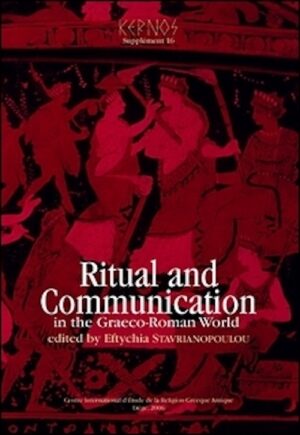
  • Eftychia STAVRIANOPOULOU (ed.)

    The analysis of the dynamic nature of rituals has become a heuristic tool for the investigation not only of religious behaviour and beliefs, but also for the study of social practice and communication in ancient and modern societies. From public assembly gatherings and funerals to celebration of cult feasts or the honouring of individuals, rituals mark socially important occasions, define beginnings and endings, and aid social transitions. Thus, rituals carry all kinds of messages intended to support and express the performance of those involved, and to create the desired results. The present volume brings together a collection of articles on rituals in the Graeco-Roman world, focussing on the interconnection between ritual as a means of communication and communication as a ritual phenomenon. In regarding rituals as an interface in the realm of cultural practices, the contributors demonstrate the manifold function of ritual communication in the life of ancient communities.

    Table of contents

    E. STAVRIANOPOULOU, Introduction W. BURKERT, Ritual between Ethology and Post-modern Aspects: Philological-historical Notes F. G. NAEREBOUT, Moving Events. Dance at Public Events in the Ancient Greek World: Thinking Through its Implications J. MYLONOPOULOS, Greek Sanctuaries as Places of Communication through Rituals: An Archaeological Perspective V. PIRENNE-DELFORGE, Ritual Dynamics in Pausanias: the Laphria E. STAVRIANOPOULOU, Normative Interventions in Greek Rituals: Strategies for Justification and Legitimation I. & A. PETROVIC, «Look who is talking now!»: Speaker and Communication in Greek Metrical Sacred Regulations I. BERTI, «Now let Earth be my witness and the broad heaven above, and the down flowing water of the Styx…» (Homer, Ilias XV, 36-37): Greek Oath-Rituals A. CHANIOTIS, Rituals between Norms and Emotions: Rituals as Shared Experience and Memory P. KATÓ, The Funeral of Philopoimen in the Historiographical Tradition M. SKOUNTAKIS, Ritual Criticism and Consolation A. B. KUHN, Ritual Changes during the Reign of Demetrios Poliorcetes S. HOTZ, Ritual Traditions in the Discourse of the Imperial Period T. KRUSE, The Magistrate and the Ocean: Acclamations and Ritualised Communication in Town Gatherings in Roman Egypt H. S. VERSNEL, Ritual Dynamics: The Contribution of Analogy, Simile and Free Association

    With the funding of the Deutsche Forschungsgemeinschaft within the framework of the Collaborative Research Centre, Dynamics of Ritual, at the University of Heidelberg

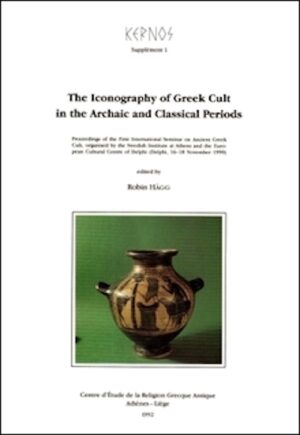
  • Proceedings of the First International Seminar on Ancient Greek Cult, organised by the Swedish Institute at Athens and the European Cultural Centre of Delphi (Delphi, 16-18 November 1990) Robin HÄGG (ed.) B. ALROTH, Changing modes of representation of cult images F. VAN STRATEN, The iconography of epiphany in Classical Greece (summary) P.G. THEMELIS, The cult scene on the polos of the Siphnian caryatid at Delphi I. LOUCAS, Meaning and place of the cult scene of the Ferrara krater T128 A. VERBANCK-PIERARD, Herakles at feast in Attic art : a mythical or cultic iconography ? E. LOUCAS-DURIE, Some comments on the scene on the Cabiric vase Athens, N.M. 424 Ch. SCHEFFER, Boiotian festival scenes : competition, consumption, and cult in Archaic black figure G. NORDQUIST, Instrumental music in Greek cult representations R. HÄGG, A scene of funerary cult from Argos U. SINN, The ‘Sacred Herd’ of Artemis at Lousoi U. HUBINGER, The cult in the ‘Sanctuary of Pan’ on the slopes of Mount Lykaion Index
  • Stefano G. CANEVA

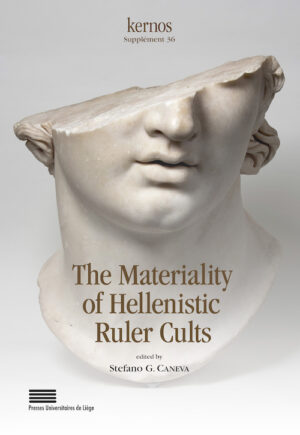
    Studies in the cultic honours for Hellenistic leaders and benefactors mainly focus on the ideological and diplomatic features of the phenomenon. Conversely, the papers collected in this volume aim to shift the focus to its material and practical aspects: media, ritual action and space, agency, administration and funding. Specialists in Hellenistic history, epigraphy, papyrology, numismatics, and archaeology provide fresh reassessments of a variety of documentary dossiers concerning both institutional and non-institutional agents (cities, kingdoms; individuals, associations), Greek and non-Greek, across the Hellenistic Eastern Mediterranean world. Moreover, this interdisciplinary investigation of the materiality of rituals addressed to human benefactors as to, or together with, traditional gods allows us to go beyond a commonly accepted yet methodologically arbitrary separation between cultic honours for deities and for human beings. The latter are often still considered as an isolated and paradoxical feature of ancient Greek polytheism, and as a deviation from ‘traditional’ religion, i.e., the cults for gods and heroes as they were already practised in the archaic and classical polis. Rather, the case studies dealt with in this book contribute to shedding new light on the way ancient people could exploit the ritual and administrative toolkit of their religious system in order to satisfy new needs. In other words, one may state that cultic honours for political leaders do not provide an exception to the way Greek polytheism functioned, but are fully embedded within it, and substantially contributed to its development in the Hellenistic age.

    Table des matières (PDF)
  • Studies in the Epicletic Language of Hellenistic Honours Stefano G. CANEVA

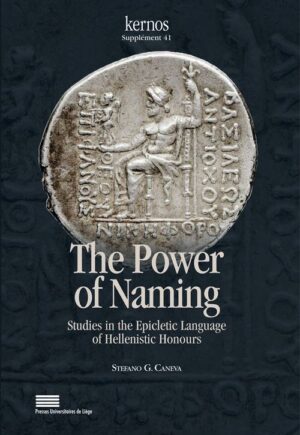
    This book focuses on the contribution of epithets and compound denominations to the definition of the religious figure of sovereigns and other political leaders in the Hellenistic world, from Philip II and Alexander III to Kleopatra VII and the beginning of the Roman Principate.

    Questions and methodologies related to the political history of the Hellenistic Mediterranean are combined with the results of recent studies in the functioning of the Greek epicletic system to provide a fresh reassessment of the entanglement between honorific practices and the religious life of Hellenistic communities, from continental Greece to Egypt, from Syracuse to Bactria. Reconsidering the relationships between honours and religion also implies reversing the question of the influence of Greek religion on Hellenistic ruler cults to explore how a new tradition of ritual encounters between human power and the divine sphere may have impacted post-classical developments in Greek polytheism.

    Table des matières (PDF)
  • Gunnel EKROTH

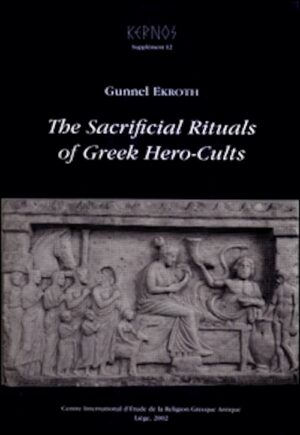
    This study questions the traditional view of sacrifices in hero-cults during the Archaic to the early Hellenistic periods. The analysis of the epigraphical and literary evidence for sacrifices to heroes in these periods shows, contrary to the traditional notion, that the main ritual in hero-cults was a thysia at which the worshippers consumed the meat from the animal victim. A particular handling of the animal’s blood or a holocaust, rituals previously taken to be typical for heroes, can rarely be documented and must be considered as marginal features in hero-cults.

    The terms escharaescharonbothrosenagizeinenagismaenagismos and enagisterion, believed to be characteristic for hero-cults, are seldom used in hero-contexts before the Roman period and occur mainly in the Byzantine lexicographers and in the scholia. Since the main kind of sacrifice in hero-cults was a thysia, a ritual intimately connected with the social structure of society, the heroes must have fulfilled the same role as the gods within the Greek religious system. The fact that the heroes were dead seems to have been of little significance for the sacrificial rituals and it is questionable whether the rituals of hero-cults are to be considered as originating in the cult of the dead.

  • Polythéisme et paysages onomastiques

    Sylvain LEBRETON

    Dans le cadre de leurs cultes, les dieux et les déesses des Grecs reçoivent des épithètes dont le nombre et la diversité participent du caractère fondamentalement polythéiste du système religieux hellénique. Au cœur de cette richesse onomastique, qui caractérise nombre de divinités, Zeus est incontestablement le mieux doté, quantitativement aussi bien que qualitativement. Une telle abondance de dénominations constitue dès lors un moyen d'accès à une meilleure connaissance de la morphologie de Zeus, tout autant qu’un défi à sa cohérence en tant que puissance divine. C’est notamment le cas à Athènes, dont la documentation, un peu moins lacunaire qu’ailleurs, permet un examen systématique et contextualisé de l’ensemble des épithètes cultuelles du dieu. Une telle étude rend compte tant de la pluralité des domaines d’intervention de celui qui est entre autres 'Au-sommet’ (Epakrios), ‘Des-bornes’ (Horios), ‘Des-biens’ (Ktèsios) ou ‘Olympien’ (Olumpios), que de la multiplicité des logiques à l’œuvre dans ses modes d’action. Elle témoigne également de la place structurante de Zeus au sein du panthéon d’une cité dominé par Athéna, dont la position tutélaire est indéniablement soutenue par le déploiement des fonctions de son père.

     
Aller en haut